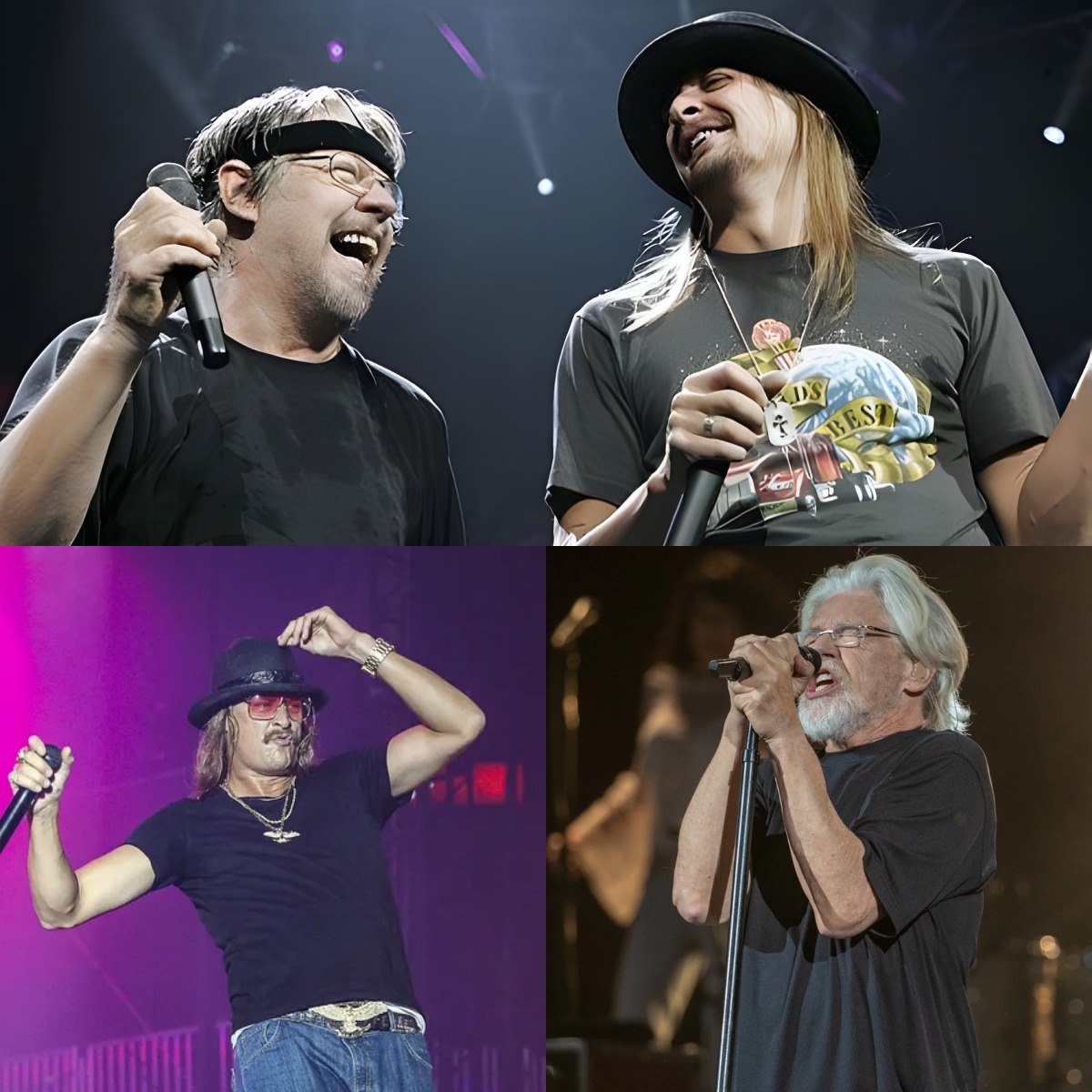
Nashville has seen legends stumble into bars before, but nothing prepared the city for the night Kid Rock turned an anonymous cover-band gig into an unscripted, cinematic eruption nobody in the room will ever forget. It began quietly, almost invisibly, with a familiar figure leaning against a wooden bar, baseball cap low, drink sweating onto a scarred countertop, blending into the crowd like a rumor waiting for confirmation.
The band on stage was mid-set, competent and confident, churning through classic rock covers for tourists and locals who wanted nostalgia more than surprises on a humid Tennessee night.
No announcement came, no signal from management, no dramatic cue from the lights, just a sudden shift in the air when Kid Rock set his glass down and started moving.
Witnesses later said the moment felt unreal, like watching a dream glitch, as the man threaded through tables, nodded once at the guitarist, and reached for the microphone.
For half a second the band froze, unsure whether to stop, adjust, or simply hold on, while phones shot upward and whispers raced faster than the bass line. Then it happened.

Kid Rock grabbed the mic and launched into “Old Time Rock & Roll” with the confidence of someone who never asked permission because permission had never applied to him anyway.
The song exploded through the room, louder, rougher, and more alive than it had been moments before, as if the walls themselves recognized the voice and leaned closer.
The band’s shock melted into survival instinct, fingers scrambling to follow as the crowd realized this was not a tribute or impression, but the real thing, unfiltered.
People who came for background music suddenly found themselves part of a moment that would not be repeated, documented only in shaky videos and breathless retellings.
Kid Rock moved like the stage belonged to him, pacing, pointing, grinning, and shouting lyrics with a raw authority that blurred the line between rehearsal and rebellion.
There was no speech, no greeting, no explanation, just music ripping through the room with the reckless joy of someone who does not care whether anyone approves.
Bartenders stopped pouring, servers stopped moving, and even the bouncers leaned back, instinctively understanding that interrupting this would be a cultural misdemeanor.
The crowd roared, not because it was polished, but because it was unexpected, chaotic, and alive in a way curated performances rarely allow themselves to be.
Some later claimed the performance felt like a dare to the industry itself, a reminder that control is an illusion once music starts breathing on its own. As quickly as it began, it ended.
The final chord rang out, applause thundered, and before anyone could shout his name, Kid Rock handed the microphone back and stepped off the stage.
No bow followed, no wink, no acknowledgement, just a walk through the stunned audience and out into the Nashville night like nothing extraordinary had occurred.
Inside the bar, people stared at each other in disbelief, blinking, laughing, replaying the moment aloud as if confirming it had actually happened.
Within minutes, social media ignited, clips spreading faster than context, captions screaming disbelief, admiration, irritation, and every emotion in between.

Critics quickly divided into camps, some calling it arrogant disruption, others praising it as pure rock-and-roll instinct untainted by schedules or contracts.
Music historians weighed in by morning, noting that unscheduled moments like this often define eras more clearly than any planned tour or televised performance.
Fans argued whether the song choice mattered, or whether the act itself was the statement, a reminder that music can still surprise in an algorithm-fed world.
Industry insiders quietly admitted that unpredictability is what audiences crave, even when it makes executives uncomfortable and venues nervous.
Nashville, a city built on stories, absorbed the moment into its bloodstream, adding it to the long list of nights that grow larger with every retelling.
For the cover band, the night became a permanent footnote in their lives, a story no résumé could adequately summarize or recreate. For Kid Rock, it was just another chapter in a career defined less by permission and more by presence.
The performance did not change charts, release albums, or announce tours, yet it shifted something subtle in the cultural weather. It reminded people that music does not always arrive through press releases or ticket portals.
Sometimes it walks up, takes the mic, and leaves before anyone knows how to respond. In an age of manufactured moments, the barroom eruption felt dangerously real. And that, more than the song itself, is why Nashville is still buzzing.
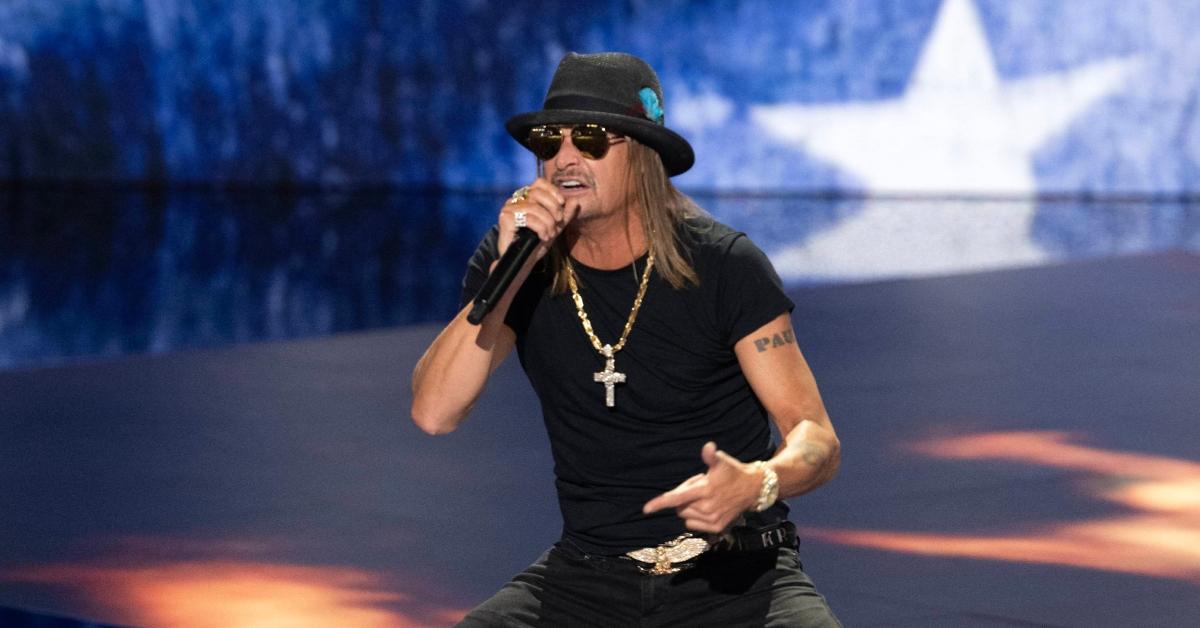
By the following afternoon, the bar had become a pilgrimage site, its worn wooden floor suddenly elevated to mythic status by nothing more than timing and impulse.
Tourists posed near the stage, pointing to the microphone stand as if it were an artifact, while locals smirked, pretending they had expected nothing less.
Staff were interviewed, their recollections growing more vivid by the hour, each retelling sharpening details that may or may not have existed in real time.
One bartender swore Kid Rock never finished his drink, another insisted he did, both agreeing only that the glass left a ring on the bar still visible.
The cover band woke up to thousands of new followers, inboxes flooded with messages ranging from congratulations to disbelief to outright envy.
Their guitarist admitted later that his hands shook for several songs afterward, not from fear, but from the realization that chaos had brushed past his life.
Music bloggers framed the moment as accidental theater, proof that authenticity still cuts through an industry polished almost to sterility.
Others framed it as provocation, a reminder that rock culture has always thrived on intrusion, defiance, and disregard for protocol.
Debate intensified as pundits questioned whether spontaneity can coexist with respect in spaces built for working musicians.
Yet even critics admitted the reaction proved something undeniable: people were desperate to feel surprised again.
Nashville’s older musicians nodded knowingly, recalling decades past when legends routinely drifted onto stages without warning or permission.
They spoke of a time before phones, when moments lived only in memory, growing taller and louder with age.

Now, those moments live forever online, flattened into pixels, debated frame by frame by strangers who were never there.
Kid Rock, true to form, said nothing publicly, offering no clarification, no apology, no explanation.
His silence only fueled the narrative, allowing supporters and detractors alike to project meaning where none was provided.
Some argued that walking off without acknowledgment was the point, a rejection of spectacle even while creating one.
Others insisted it was calculated, another example of a performer who understands controversy better than consensus.
Industry executives quietly studied the numbers, noting spikes in engagement, search traffic, and nostalgia-driven playlists.
They asked themselves uncomfortable questions about why a single unscheduled moment outperformed months of curated promotion.
Sociologists chimed in, framing the incident as cultural hunger manifesting through disruption.
In uncertain times, they argued, audiences gravitate toward figures who act without scripts.
Psychologists noted the appeal of witnessing power exercised casually, without ceremony, as both thrilling and unsettling.
Meanwhile, the bar returned to normal, its nightly crowds once again listening politely to familiar songs.
Yet something lingered in the air, a sense that the ordinary could still rupture at any moment.
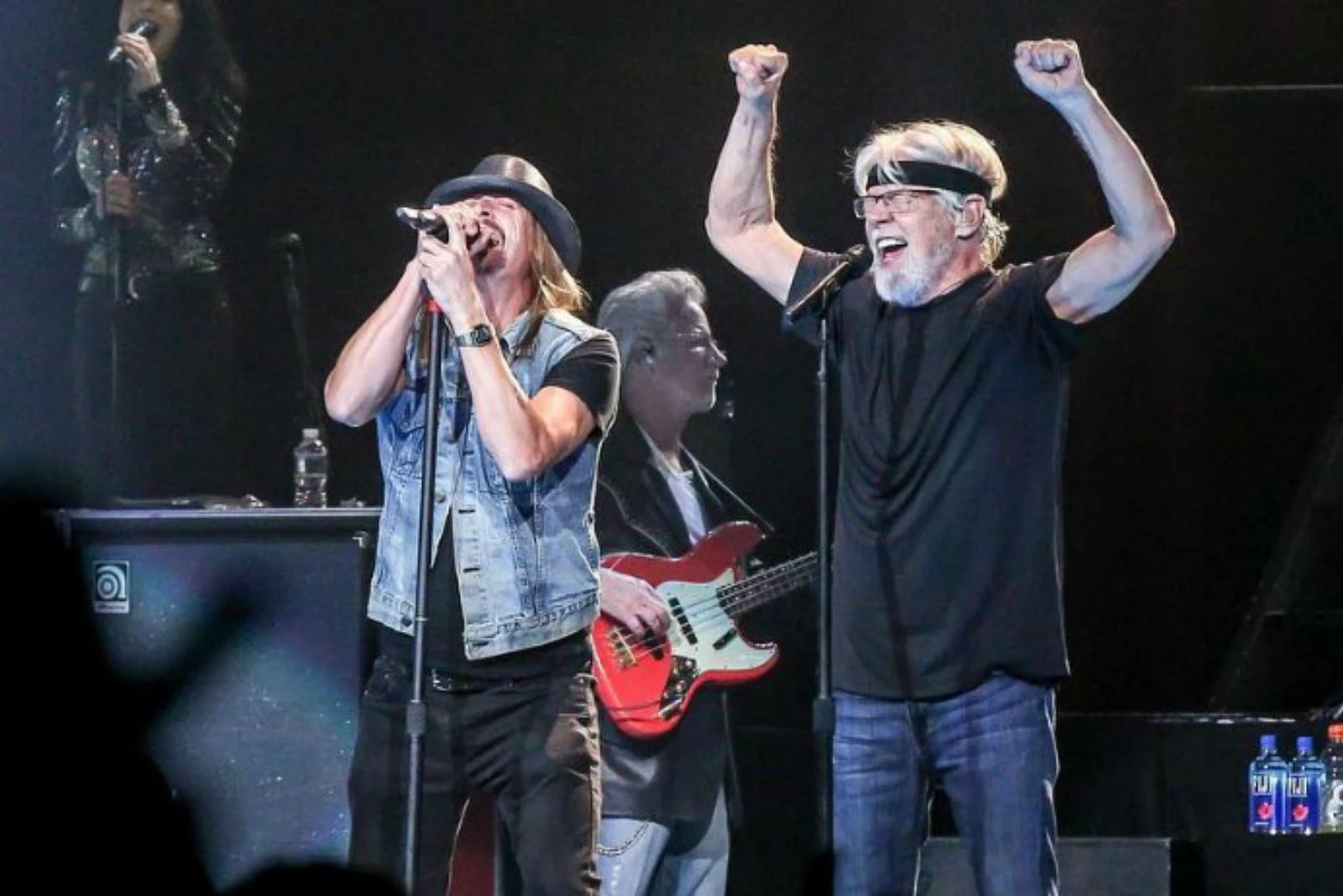
Regulars watched the door more closely, half-expecting another apparition, another interruption of routine.
The cover band played tighter, louder, fueled by the knowledge that lightning had struck once and could strike again. Their setlists grew bolder, confidence sharpened by proximity to chaos.
Stories spread beyond Nashville, entering the broader mythology of American music, where truth and exaggeration blur productively.
In online forums, fans argued about whether the moment mattered at all, or whether meaning was imposed after the fact. But meaning, like music, does not require consensus to exist. It only requires impact.
Long after the clips stopped trending, the night persisted in conversation, resurfacing whenever someone complained that music felt predictable. It became shorthand for something ineffable: the reminder that art can still hijack the room.
That it can still arrive unannounced, ignore etiquette, and leave without closure. For Nashville, a city balanced between tradition and tourism, the incident reinforced an old truth beneath the neon.
Control is temporary. The stage belongs to whoever dares to step onto it. And sometimes, the most unforgettable performances are the ones that were never supposed to happen at all.


