
What began as a single pointed remark has now erupted into one of the most divisive entertainment debates of the year, cutting straight through Hollywood’s carefully curated illusion of unity.
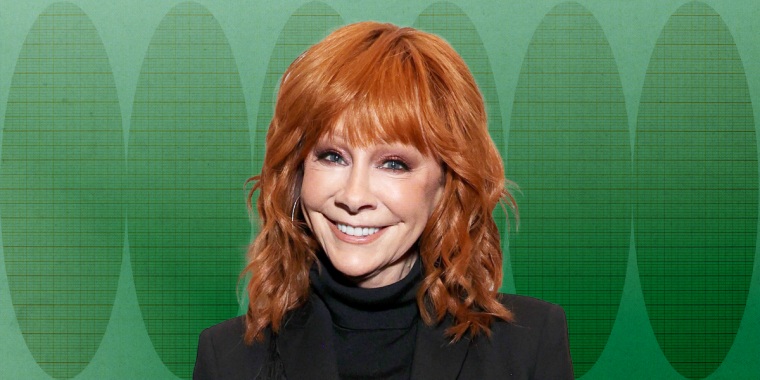
Reba McEntire, a country music icon known for restraint rather than provocation, has unexpectedly positioned herself at the center of a cultural storm few saw coming.
Her criticism of Erika Kirk was not loud, theatrical, or inflammatory by traditional standards, yet it landed with the force of a controlled detonation.
Calling Kirk’s public persona a “calculated performance,” McEntire challenged something far more sensitive than a single celebrity’s image.

She challenged the machinery behind modern fame itself.
Within hours, the comment spread across social platforms, entertainment newsrooms, and private industry group chats, transforming from opinion into flashpoint.
For decades, Reba McEntire has represented authenticity, longevity, and earned respect in American music culture.
Her career was built on consistency rather than spectacle, storytelling rather than branding theatrics, and a relationship with audiences rooted in perceived sincerity.
That history is precisely why her words carried such weight.
Industry insiders immediately noted that McEntire was not merely criticizing Erika Kirk as an individual.
She was questioning a system increasingly driven by image engineering, algorithmic relevance, and aesthetic dominance over artistic depth.
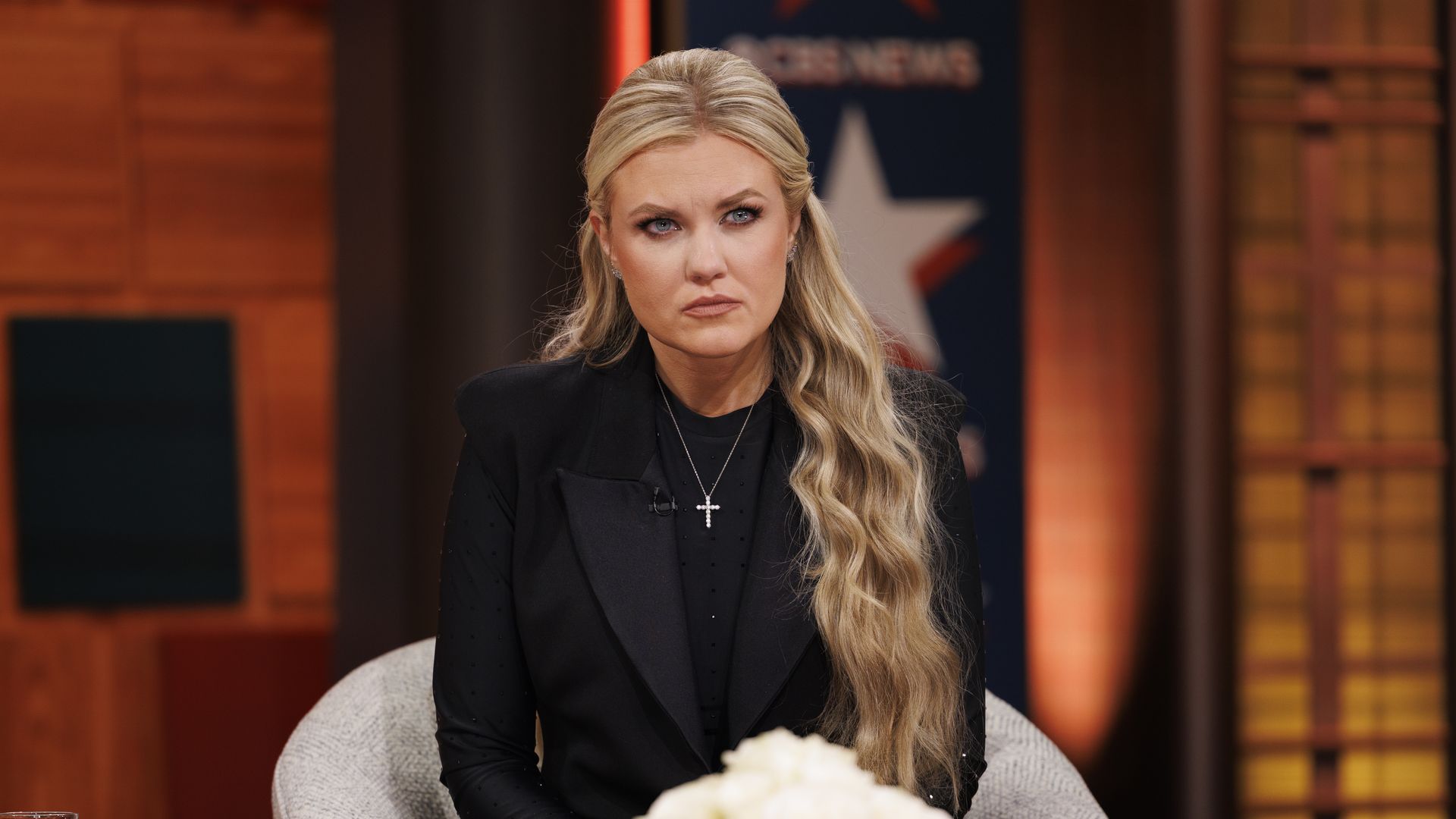
Erika Kirk, by contrast, embodies the modern celebrity archetype.
:max_bytes(150000):strip_icc():focal(740x316:742x318)/erika-kirk-120925-3c587a4964c34bb9878656b42cc6b1c0.jpg)
Immaculate styling, meticulously planned public appearances, tightly controlled interviews, and a social media presence that never strays off-brand.
To her fans, this represents professionalism and mastery of a brutal industry.
To her critics, it signals something hollow.
McEntire’s remarks surfaced just days before Kirk’s highly anticipated All-American Halftime Show appearance, a coincidence many found impossible to ignore.
The timing intensified scrutiny, drawing attention to every silence, every non-response, and every carefully worded statement from Kirk’s camp.
As public debate escalated, Kirk’s team remained conspicuously quiet.
No rebuttal. No clarification. No emotional defense.
In today’s media climate, silence often speaks louder than denial.
Supporters of McEntire argue that her critique exposed an uncomfortable truth long whispered behind closed doors.
They claim Hollywood increasingly rewards performance over purpose, image over integrity, and branding over substance.
For them, McEntire’s words resonated as overdue honesty.
Others, however, view the remarks as an unfair personal attack disguised as cultural commentary.
They argue that Kirk’s success reflects adaptation, not deception, in an industry that demands constant visibility and reinvention.
This division has fractured audiences along generational, cultural, and ideological lines.
Older fans largely praise McEntire’s candor, framing her as a voice of artistic conscience.
Younger audiences, more accustomed to digital branding realities, often defend Kirk as simply playing the game better than most.
Entertainment analysts note that this clash represents more than celebrity drama.
It reflects a deeper conflict over what authenticity even means in the age of curated identities.
Is authenticity raw imperfection, or can it coexist with strategic presentation?
Can a public persona be both engineered and genuine?
These questions now dominate panels, podcasts, and comment sections alike.
The entertainment press has seized on the story, framing it as a proxy battle for the soul of modern stardom.
Some outlets portray McEntire as a whistleblower figure, challenging an industry drifting toward superficial excess.
Others caution against romanticizing a past era that excluded many voices now thriving within the system Kirk represents.
Meanwhile, social media amplifies every angle.
Clips of McEntire’s statement circulate alongside edited montages of Kirk’s performances, outfits, and red carpet moments.
Hashtags split audiences into opposing camps, each convinced they are defending truth.
The All-American Halftime Show now carries unprecedented symbolic weight.
What was once entertainment has become referendum.
Every move Kirk makes on that stage will be interpreted not just artistically, but ideologically.
Will she lean into spectacle, reinforcing critics’ claims?
Or will she pivot toward restraint, signaling awareness of the backlash?
:max_bytes(150000):strip_icc():focal(749x0:751x2)/Erika-Kirk908-120325-13dafeecb75e422593a7db016e001512.jpg)
Industry veterans quietly acknowledge that McEntire’s intervention disrupted an unspoken rule.
Public criticism between established figures is usually softened, coded, or avoided altogether.
Direct challenges risk destabilizing alliances, sponsorships, and carefully balanced power structures. Yet McEntire appears unconcerned with fallout.
Those close to her describe the comment as intentional, measured, and rooted in long-standing frustration rather than impulse.
They insist she was prepared for backlash. For Kirk, the situation is far more delicate. Responding risks amplifying the criticism.
Remaining silent risks validating it. In modern celebrity culture, every choice is a message.
Public relations experts warn that how Kirk navigates this moment may define her career more than any performance. Fans, meanwhile, are no longer passive observers.
They dissect motives, analyze tone, and project meaning onto every development. The audience has become participant.

At its core, this feud exposes a fault line between two visions of success. One built on longevity, earned credibility, and perceived authenticity.
The other built on visibility, adaptability, and strategic self-presentation. Neither side is inherently wrong. But the tension between them is real.
As Hollywood grapples with evolving definitions of artistry and value, McEntire’s words function as both critique and catalyst. They force uncomfortable reflection within an industry that thrives on illusion.
Whether this moment results in meaningful change or simply another cycle of outrage remains uncertain. What is clear is that the conversation will not fade quietly.
The silence from Kirk’s camp continues to fuel speculation. The anticipation surrounding the Halftime Show grows heavier by the hour.
And audiences remain sharply divided, invested not just in outcome, but in meaning. Is Reba McEntire exposing a manufactured reality long protected by fame?
Or is she resisting an evolution she no longer recognizes? Perhaps the truth lies somewhere between. But one thing is undeniable. Hollywood is watching. And it cannot look away.


